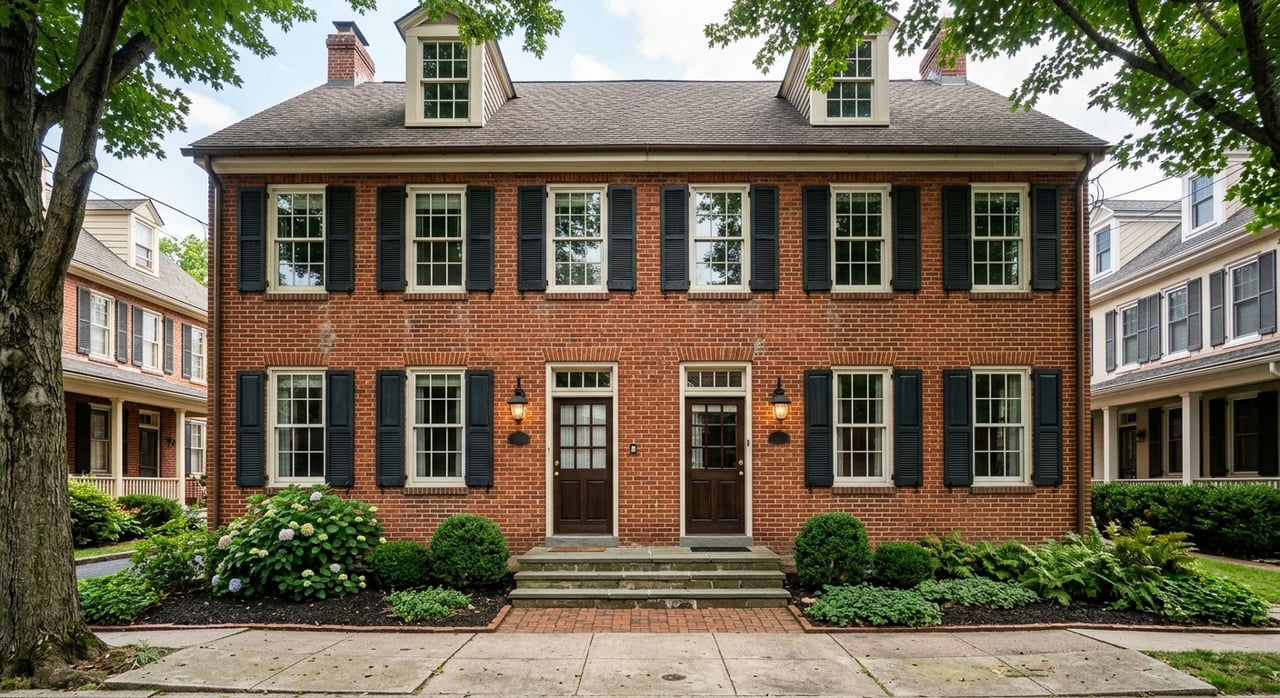
What to Review Before Buying a Lansdale Multi Family Investment
May 14, 2026
May 14, 2026
Wondering whether a small multifamily property in Lansdale is a smart investment or a headache waiting to happen? If you are looking at a duplex, triplex, or four-unit building here, the numbers can look promising at first glance, but the real story is in the details. When you understand rent benchmarks, transit access, licensing rules, and property condition, you can make a much more confident decision. Let’s dive in.
Lansdale offers something many small investors want: a compact borough setting with a mix of housing, local services, and transit access. According to Census QuickFacts, Lansdale has 19,154 residents within just 2.99 square miles, which creates a denser, more connected local housing market than many larger suburban areas.
That compact footprint matters when you are assessing rental demand. Lansdale also has 7,330 households, a median gross rent of $1,470, and a mixed owner-renter profile, with 55.3% of occupied homes owner-occupied. Add in the fact that 20.1% of residents are foreign-born and 26.0% of residents age 5 and older speak a language other than English at home, and you can see why the renter pool is not limited to one narrow demographic group.
One of Lansdale’s strongest investment features is access to public transit. SEPTA identifies three Lansdale/Doylestown Line stops within the borough: Lansdale Station, Pennbrook Station, and 9th Street Station.
Bus routes 94, 96, and 132 also serve Lansdale, connecting riders to places like Montgomery Mall, Chestnut Hill, Norristown Transportation Center, and Telford. For an investor, that can support broader tenant demand because renters are not relying only on immediate neighborhood convenience.
When you underwrite a small multifamily property, rent assumptions need to be grounded in facts, not best-case thinking. A useful starting point comes from Montgomery County’s 2025-2029 Consolidated Plan, which lists Fair Market Rents of $1,372 for an efficiency, $1,512 for a one-bedroom, $1,802 for a two-bedroom, $2,171 for a three-bedroom, and $2,468 for a four-bedroom unit.
These are not the same as current market comps, and they should not replace actual unit-by-unit analysis. Still, they can serve as conservative benchmarks when you are evaluating whether asking rents or projected rents in Lansdale are reasonable.
Lansdale’s boroughwide median gross rent of $1,470 sits below the county’s two-bedroom Fair Market Rent benchmark. That suggests there may be upside in the right property, but only when the location, condition, and legal setup support that rent level. In other words, rent growth is not automatic.
It is tempting to look for one vacancy rate or one rent rule that applies to every building in town. In practice, that is not how small multifamily investing works.
Guidance cited in the research report notes that vacancy and collection loss are usually estimated on a property-specific basis, and that vacancy is part of calculating net operating income. For a Lansdale duplex, triplex, or fourplex, the smarter move is to stress-test each deal based on unit condition, expected turnover, rent level, and the time it may take to lease a vacancy.
Before you get too attached to the deal, ask:
Those questions can change the math quickly.
Cap rate is one of the most common ways investors compare income properties, but it should never be used in isolation. Freddie Mac defines a cap rate as the rate used to convert expected net operating income into present value, and the basic relationship is straightforward: NOI divided by cap rate equals value.
The catch is that small changes in income or expenses can shift value in a big way. A rent roll might look attractive at first, but if you need major repairs, face vacancy, or inherit underpriced leases, the deal may not perform the way you hoped.
In Lansdale, strong underwriting usually means looking beyond headline numbers. You want to calculate income after:
A property with lower advertised income but cleaner systems, clearer legal use, and fewer deferred repairs may be the safer buy.
This is one of the biggest points in Lansdale. The borough’s Code Enforcement department handles building, zoning, land development, housing, and property maintenance enforcement, and it issues permits for use and occupancy, repairs, replacements, additions, and similar work.
That means you should verify the legal use of the property before relying on a seller’s description or an old listing. If a building is advertised as a multifamily property, you still need to confirm that the unit count and use align with borough records.
Permit history can tell you a lot about risk. If prior renovations, additions, or system upgrades were done without permits, you could end up facing delays, added costs, or compliance issues after closing.
Lansdale requires permits for many common upgrades and repairs, including roofs, boilers, furnaces, fire alarm or fire suppression systems, sewer laterals, water service, and remodeling that involves structural changes. The borough also requires permits for change of owner and change of use, and it issues a Certificate of Occupancy when completed work complies with borough ordinances.
If you plan to operate a residential rental property in Lansdale, licensing is not optional. The borough requires an annual license for all residential rental dwellings, and the current rental-license application shows a fee of $65 per rental unit.
The application also states that incomplete applications may be denied until the building is in full compliance with borough codes and ordinances. For investors, that means licensing should be treated as an operating requirement, not a minor paperwork item.
Older 2-4 unit properties can be appealing because of location, charm, or value-add potential. They can also come with expensive surprises.
Lansdale’s apartment inspection guidance highlights the issues investors should treat as core underwriting items: interior structure, plumbing, electrical, smoke detectors, fire extinguishers, egress, roof, foundation, steps and railings, sidewalks and driveways, and other exterior maintenance. These are not cosmetic details. They can directly affect safety, compliance, and your timeline for collecting full rent.
If you are reviewing a property, look carefully at:
When these issues show up, your renovation budget needs to reflect them before you estimate returns.
Some investors are drawn to downtown or mixed-use properties because they appear to offer multiple income streams. In Lansdale, those opportunities can be more complex than they first appear.
The borough’s zoning code makes the Mixed-Use Overlay District a conditional-use category tied to Borough Council designation, a master plan, a minimum 4-acre lot area, and at least 30% residential floor area in the approved plan, along with shared access, parking, and stormwater planning. In practical terms, a mixed-use building should be treated as a zoning review project before it is treated as a simple income property.
If you are assessing a small multifamily investment in Lansdale, keep your process grounded and simple. The best opportunities usually check three boxes: legal clarity, physical readiness, and realistic income.
Here is a useful framework:
Verify zoning, legal use, unit count, and permit history with the borough. Do not assume a building is fully compliant just because it has tenants in place.
Use realistic rent assumptions, stress-test vacancy, and include operating costs, reserves, and licensing fees. Avoid relying on pro forma numbers that assume immediate rent increases without upgrades.
Pay close attention to life-safety items, building systems, exterior maintenance, and anything that could delay occupancy or trigger compliance work. These issues often make the difference between a manageable project and a costly one.
A turnkey property and a value-add property require different risk tolerance, timelines, and cash reserves. Make sure the building’s condition lines up with your budget and goals.
Lansdale can make sense for small multifamily investors who value a compact borough setting, a broader renter pool, and meaningful transit access. But this is not a market where you want to skip due diligence or underwrite from a spreadsheet alone.
The strongest deals tend to be the ones where the legal use is clear, the renovation scope is permit-ready, and the rent expectations are tied to actual condition and local benchmarks. If you take a careful, property-specific approach, Lansdale can offer solid opportunities without relying on wishful thinking.
If you are considering a duplex, triplex, or four-unit property in Lansdale and want a practical local read on the opportunity, Ryanne Sullivan can help you evaluate the property with clear, grounded guidance.
Stay up to date on the latest real estate trends.
With Ryanne extensive knowledge and commitment to providing only the best and most timely information to her clients, she is your go-to source for real estate industry insight and advice. Buying or selling a home is more than just a transaction, it's a life-changing experience. Feel free to contact her for all your real estate needs.